On September 19th, Jesus College held its annual black-tie dinner for alumni. The guest of honour was Tilly Franklin, CEO and Chief Investment Officer of University of Cambridge Investment Management (UCIM), the group responsible for managing the Cambridge University Endowment Fund (CUEF), which is currently heavily invested in fossil fuels, surveillance tech, and arms. Jesus College currently invests £50 millions in CUEF1.
UCIM: What do they do?
UCIM and its shareholders, the Cambridge University Endowment Trustee Body (CUETB), oversee and manage the university’s investments, including the CUEF 2.

They manage a “Fund of Funds” overseen by other investment managers that spreads investments across several industries. They are very closed-lipped about which companies and even industries these investments are made in.
This system has been criticised heavily by university students and staff for obscuring the level of investment in harmful industries, preventing reasonable discussion of where the university’s money is going3.
Oil and Arms: A history of deflection
Cambridge University has a long history of investments and partnerships with fossil fuel and arms companies.
From branded BP labcoats4 and the Shell Professorship5, along with investments in fossil fuel and oilfield services providers like SLB, the university has deep ties to the fossil fuel industries.
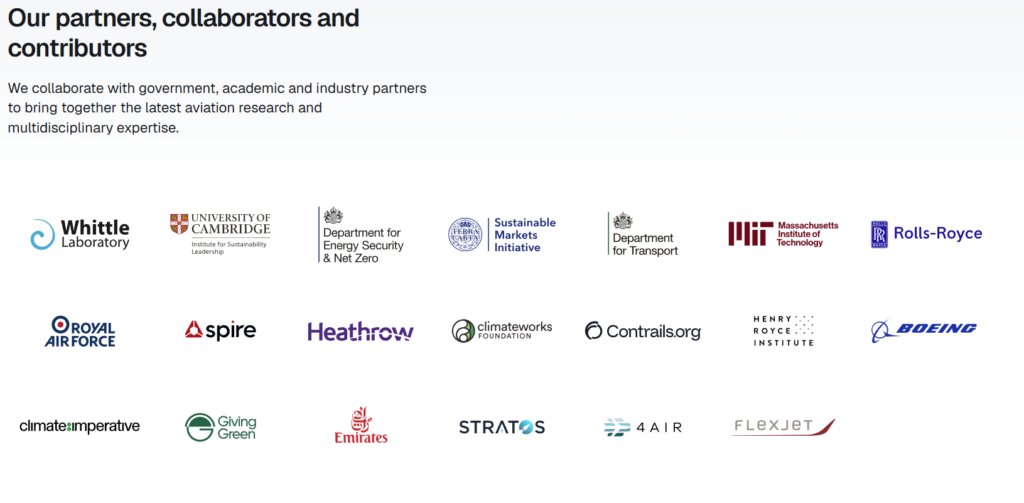
Similarly, their engineering departments often work very closely with companies like Rolls-Royce and Boeing, both of which are known worldwide as arms manufacturers. Partnerships which continue to this day, with both companies being partners of Whittle Lab and CISL’s Aviation Impact Accelerator6
But there is also a long history of opposition to these investments. Mass student pressure, the Topping Report7 and the campaigns of groups like ORCA and Cambridge Zero Carbon8 put pressure on the university to divest from fossil fuels; and the King’s College Encampment9 and repeated protests by pro-Palestine activists called on the university to divest from arms.
Both of these campaigns resulted in the university appearing to comply.
Regarding fossil fuels, they promised to end investments with “conventional energy-focused public equity managers” by 2021 but not divest from fossil fuels as a whole until 2030, and not aiming to achieve net-zero in its portfolio until 203810.
On arms, promises were made about “Transparency” and “Reducing Exposure” with a monitoring system that would alert the CUETB when a certain level of arms investment was reached and prompt a reduction in exposure11.
The arms transparency system was scrapped, and a grace requiring divestment from fossil fuels and arms was blocked by the university council 12 13.
The university continues to invest in these industries because it wants to, because it is profitable, and because the consequences of those investments are easy for it to ignore. For arms and for oil their playbook is the same: make promises of change, belay them in administrative red tape and Byzantine bureaucratic systems, then quietly drop them and continue with the status quo.
What are they funding?
The university remains invested in fossil fuels, arms companies, and surveillance tech. The full extent of this investment is obscured, but here is what we do know.
UCIM purchased $192,033,000 (£143,551,358) in shares of BlackRock’s iShares ESG Select Screened S&P 50014 ETF (XVV15).
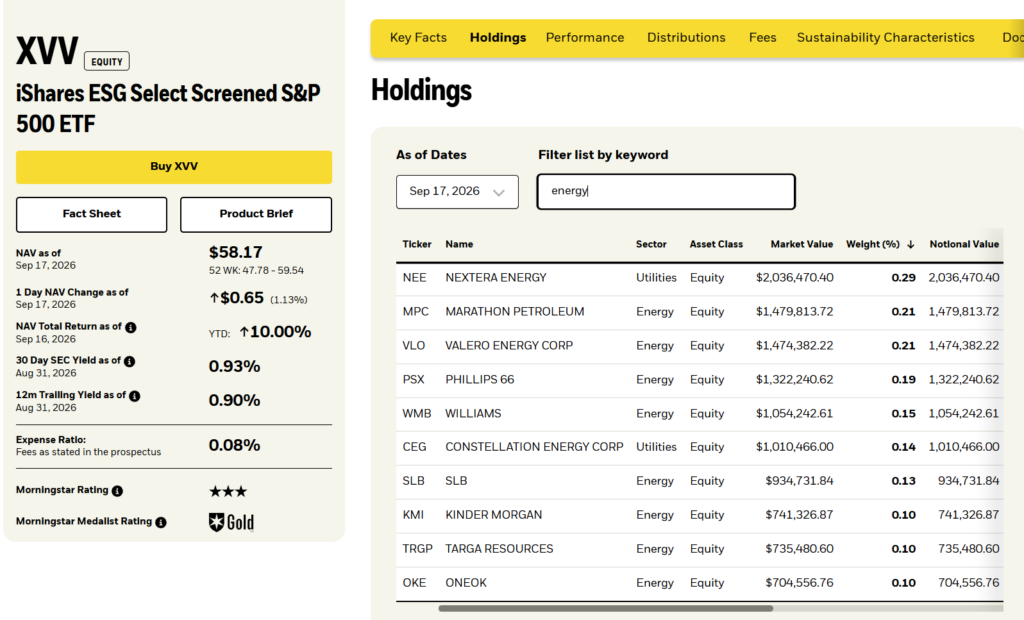
This fund is designed to “Screen out small arms, controversial weapons, tobacco, [and] fossil fuels”16. Yet many companies it holds are heavily tied to fossil fuels, the genocide in Gaza 17 18, and other racist and colonial exploitation the world over.
XVV contains investments in:
- Palantir, which creates AI surveillance tech. It has partnerships with both the British and Israeli defence agencies and ties to American far-right political actors; it is an essential part of recent ICE brutality19 (0.69% of the fund),
- Caterpillar, which produces the bulldozers Israeli forces have used to demolish homes and hospitals, as well as crush civilians to death20 (0.63% of the fund),
- GE Aerospace who produce engine platforms for military aircraft including those used in the genocide in Gaza21 (0.56% of the fund),
- Freeport-MacMoRon a mining company who owned and operated the Grasberg mine in occupied West Papua for over 50 years, polluting rivers, poisoning wildlife, and exploiting local workers while paying kickbacks to a violent security state to help them maintain their dominance 22 23 (0.17% of the fund),
- 14 fossil fuel or directly fossil fuel adjacent energy companies including SLB, Marathon Petroleum, Phillips 66, Oneok, Constelation Energy, Williams, Baker Hughes Class A, and more. (1.96% of the fund),
- Countless other deeply harmful companies from CocaCola (0.58%), one of the world’s largest plastic polluters and a driver of drought, to Alphabet Inc (6.24%) and Amazon (4.19%) who are driving Israel’s project nimbus, a plan to bolster IDF capabilities with AI and aid in other aspects of their colonialism24 25.
What are the consequences?
These seem like small percentages, and the university will state it is only tangentially attached to these industries. But when you look at the amount of money UCIM has invested in this fund, the amounts are staggering.
That £143,551,358 breaks down into
- £990,504 in Palantir
- £904,373 in Catterpilar
- £803,887 in GE Aerospace
- £244,037 in Freeport MacMoRon
- £832,597 in CocaCola
- £2,813,606 in the fossil fuel industry
- £14,972,406 in companies involved in Project Nimbus
The university can claim to be making “sustainable investments” but there is clear and concrete evidence that this is not the truth, and that the university’s “world-class education” is provided using profits from exploitation and genocide.
The university’s money is directly funding companies poisoning our planet and actively enabling a genocide for profit. The worst part is that all of the examples stem from a single fund. Remember, UCIM invest in several funds, the specifics of which they refuse to disclose.
Investments in that fund were found because the $192 million invested in it was large enough to require disclosure to financial regulators.
That sum makes up a little over 3% of the total £4.4 billion UCIM manages26.
UCIM investing 3% of the wealth they manage into a single fund meant investing almost £3 million in fossil fuels and another £3 million in companies enabling genocide. We only know about it because they were forced to disclose it to regulators; we know nothing about the other funds they use or where the other 97% of that fund is invested. But based on the words of Mark Lewissohn, CUETB chair 17,
“As more investment in defence is mandated by governments around the world, the proportion of global market capitalisation represented by defence is likely to further increase,”
It’s not looking like it’s going anywhere good.
What do we do?
Its clear the University wants to continue investing in fossil fuels and arms as long as it remains profitable, the money they receive in donations, and investment revenue will continue to fund atrocities and climate destruction.
We need to keep up the pressure on the university to divest from these harmful industries, and to reduce the amount of funding we give them, however we can.
So the next time you get an email from the university soliciting donations, remember what they’ll use them for and delete it.
Sources
- https://cambridgedivest.co.uk/colleges/jesus-college/ ↩︎
- https://web.archive.org/web/20260716202741/https://www.ucim.co.uk/who-we-are/our-boards ↩︎
- https://www.theguardian.com/education/2026/jan/31/cambridge-university-accused-obfuscation-arms-investment ↩︎
- https://web.archive.org/web/20240309182034/https://eastangliabylines.co.uk/lab-coats-and-a-logo/ ↩︎
- https://en.wikipedia.org/wiki/Shell_Professor_of_Chemical_Engineering ↩︎
- https://aiazero.org/about-us/ ↩︎
- https://www.varsity.co.uk/news/25893 ↩︎
- https://web.archive.org/web/20250319152056/https://zerocarbonsoc.soc.srcf.net/ ↩︎
- https://www.middleeasteye.net/news/war-gaza-uk-cambridge-oxford-students-launch-protest-encampments ↩︎
- https://www.theguardian.com/education/2020/oct/01/cambridge-university-divest-fossil-fuels-2030-climate ↩︎
- https://www.varsity.co.uk/news/31568 ↩︎
- https://www.varsity.co.uk/news/31846 ↩︎
- https://www.middleeasteye.net/news/cambridge-university-backtracks-divesting-arms-companies ↩︎
- https://web.archive.org/web/20260905195354/https://www.tickerreport.com/banking-finance/13571816/531033-shares-in-ishares-esg-select-screened-sp-500-etf-xvv-acquired-by-waycross-investment-management-co.html ↩︎
- https://www.ishares.com/us/products/315917/ishares-esg-screened-s-p-500-etf ↩︎
- Screen out small arms, controversial weapons, tobacco, fossil fuels ↩︎
- https://www.middleeasteye.net/news/exclusive-cambridge-put-ps140m-fund-owning-shares-companies-linked-israeli-rights-abuses ↩︎
- https://www.thejc.com/news/uk/cambridge-continue-investing-idf-linked-firms-j9ak5ld1 ↩︎
- https://afsc.org/palantir-explainer ↩︎
- https://aoav.org.uk/2025/an-economy-of-genocide-un-special-rapporteur-names-global-corporations-enabling-israels-assault-on-gaza/ ↩︎
- https://caat.org.uk/data/companies/ge/ ↩︎
- https://corpaccountabilitylab.org/calblog/2022/2/28/fifty-years-of-corporate-exploitation-the-story-of-us-mining-giant-freeport-amp-papuas-stolen-sovereignty-part-i ↩︎
- https://corpaccountabilitylab.org/calblog/2022/7/28/fifty-years-of-corporate-exploitation-environmental-labor-amp-human-rights-abuses-by-us-mining-giant-freeport-part-ii ↩︎
- https://www.thenation.com/article/economy/amazon-prime-day-israel/ ↩︎
- https://www.theguardian.com/commentisfree/2021/oct/12/google-amazon-workers-condemn-project-nimbus-israeli-military-contract ↩︎
- https://www.ucim.co.uk/annual-report-2025/overview ↩︎